Slingshot Bio
Roboto converged Slingshot Bio's WordPress and Shopify sites into one headless Shopify build on Next.js and Sanity, instrumented end to end and AI-ready.
View case study


From KeystoneJS to Framer
Last verified:
The process
First we check the existing KeystoneJS and see whether the data is clean enough to move straight over to Framer, and plan around any auth walls or bot protection in the way.
Then we work out how KeystoneJS renders its pages and pull the content out, even without CMS access.
Everything extracted runs through our sanitization pipeline, which flags slop, normalizes structure, and leaves us clean content to work with.
Before anything moves, we agree the Framer content model with you, shaped around how your editors actually work.
We transform the content to the agreed schema and run a full dry run, so mappings and edge cases prove out before production.
Once the dry run is clean, everything moves into Framer in one controlled cutover.
Every old URL gets mapped to its new home with the right redirect, so rankings and link equity survive the move.
Finally, automated browsers sweep the new site for data issues, design regressions, and missing SEO signals.
Key pain points
The biggest challenge with KeystoneJS is that it hands you all the responsibility that a managed CMS would normally handle. Deployment is entirely on you, and the documentation around production hosting, Docker configuration, and scaling is thin. We've seen teams struggle to go from a smooth local development experience to a reliable production setup, especially if they don't have dedicated DevOps support. The admin UI Docker image alone can balloon to over a gigabyte, which is a headache for containerized deployments.
The community around Keystone is significantly smaller than competitors like Strapi or Payload. That means fewer tutorials, fewer plugins, and slower answers when you hit an edge case. The ecosystem of ready-made integrations is almost non-existent, so you'll be building most things from scratch. For an agency working on client projects with deadlines, that time cost adds up quickly.
Content editors also tend to have a harder time with Keystone compared to more polished alternatives. The admin UI is functional but feels utilitarian, and non-technical users often need more onboarding than you'd expect. There's no visual editing, no preview infrastructure, and no real content workflow features like drafts, publishing schedules, or approval chains without building them yourself. If your client's content team needs a CMS they can pick up and run with, Keystone usually isn't the answer.
Deployment complexity
Self-hosting is the only option, and the docs don't hold your hand. Getting Keystone into production requires real infrastructure knowledge, and the large Docker image sizes make it worse.

Small community and ecosystem
Compared to Strapi or even Payload, the community is much smaller. Fewer plugins, fewer tutorials, and slower support when things go wrong.

No built-in content workflows
There are no turnkey drafts, scheduled publishing, or approval chains. Keystone provides field primitives that can be assembled into publishing workflows, but you need to wire them up yourself.
Admin UI feels dated
The admin panel is functional but lacks the polish and UX of modern CMS interfaces. Non-technical editors often find it confusing and need more training.
No visual editing or live preview
There's no way for editors to see content in context before publishing. You'd need to build your own preview infrastructure, which is a significant engineering effort.
Scaling requires significant effort
Running Keystone under high traffic means managing session stores, reverse proxies, and server resources yourself. It doesn't scale as smoothly as cloud-native CMS alternatives.
Key advantages
If you live in Figma all day, Framer is the right choice for you. You can import your layouts, tweak a few interactions, hit publish, and suddenly you’ve "built a website" without ever opening VS Code. The no-code editor is fast, the animations look like you actually care about UI, and the built-in hosting + global CDN means you never have to touch a server or pretend you know what an SSL certificate is.
Multiple people can jump in, rewrite copy, adjust layouts, and preview the site instantly in real time with zero handoff pain, and "can you push this to staging?" nonsense. The SEO defaults are strong, images automatically behave, and performance is fast without you having to obsess over Lighthouse scores.
Can't knock the service, but we're here when you're looking to build something more scalable.
Ability to control layout with drag and drop
You can drag, drop, and publish without the need for any developer or having experience in website development. With Framer, you can easily turn your mockup into a working page.
Quick and cheap to build something
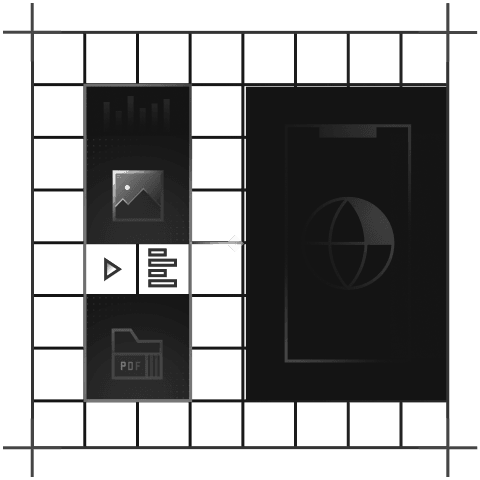
If you need a site yesterday (and on a budget), go ahead with Framer. You can go from a Figma-level idea to a live marketing page in a few hours without writing any code or having developers wait on stand-ups.
Some optimization comes by default
Framer quietly handles things like image compression, semantic markup, and basic SEO hygiene. You ship quickly, and the site doesn't fall apart in Lighthouse analyses.
Huge library of themes
You can pick a template, tweak a few components, and you’re basically done. Its theme library is stacked, and most of it looks "portfolio ready" right out of the box.
Real-time team collaboration
Multiple people can jump in, edit, comment, and tweak designs live like Figma. It speeds up feedback loops and kills the endless back-and-forth.

Intuitive, designer-friendly UI
If you know your way around Figma, you’ll be able to use Framer without any difficulty. Framer’s interface is simple, and keeps designers moving without begging a developer for help.
Tell us what you're building. We reply within one working day. Jono or someone on the team picks up every message personally.
Join the growing list of successful migrations