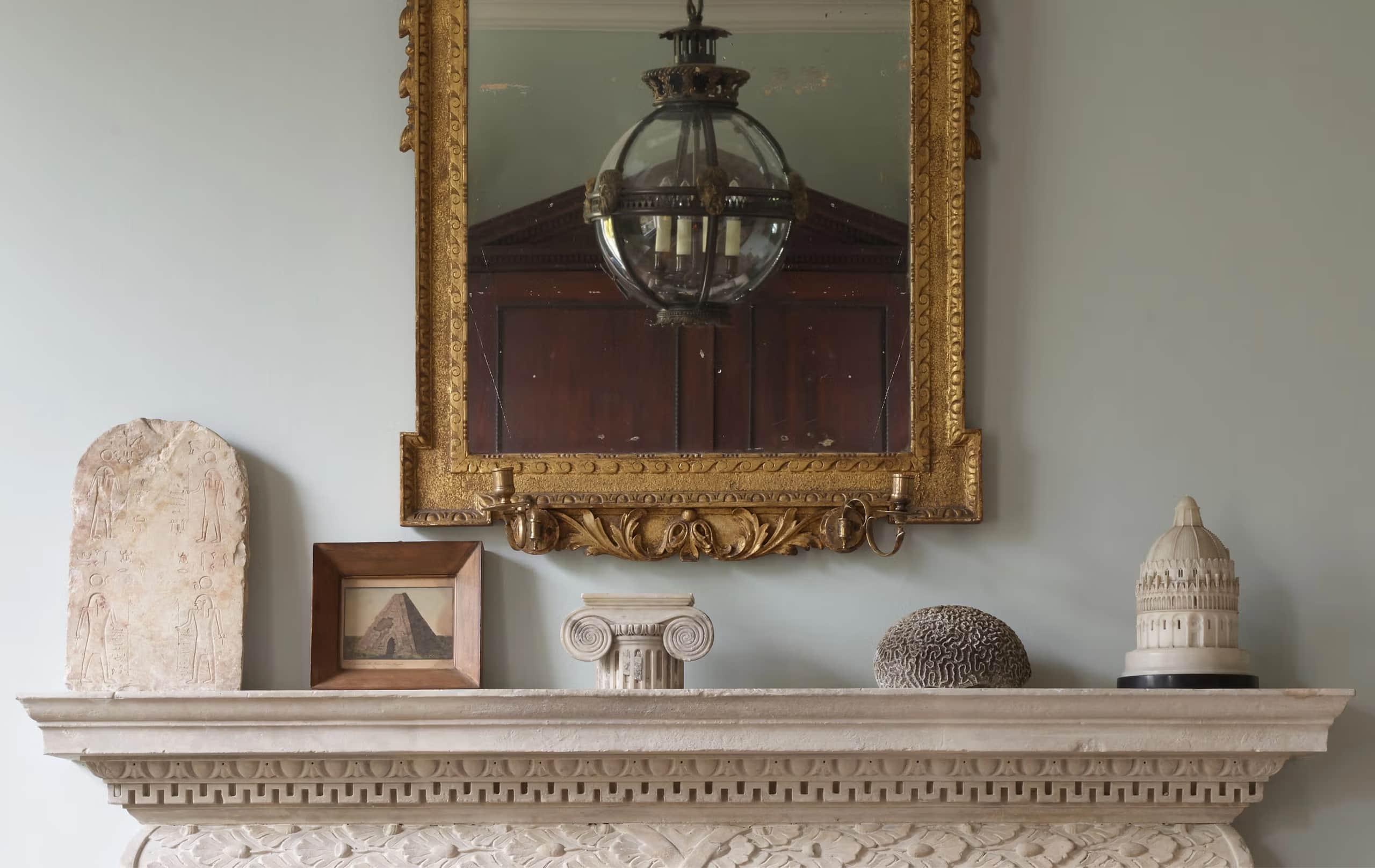
Jamb
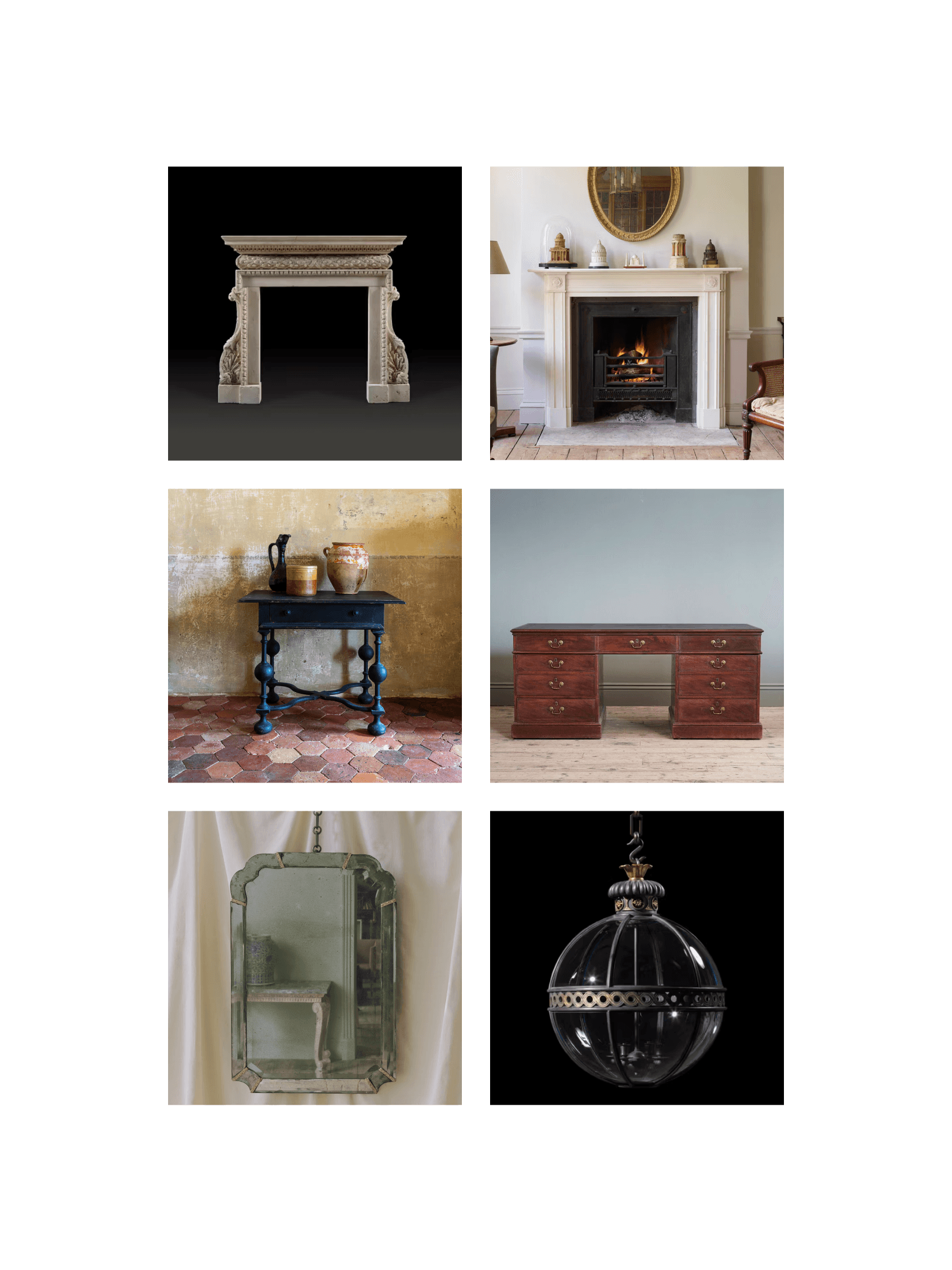
A Sanity and Next.js rebuild for the london-based design house collectors and interior designers turn to for antique and reproduction fireplaces, lighting, and furniture.
Overview
Merge that didn't work
Jamb and Hawker Antiques had just merged when we picked up the project. Two PHP sites, 70+ duplicate meta descriptions, and a custom CMS where adding a furniture category meant hoping nothing else fell over. The catalogue runs from 18th-century Irish chimneypieces to six-figure antiques, the kind of stock collectors and interior designers wait years for. Most of it sells through enquiry rather than a cart. We worked with Toni Howarth and the benweaver.eu (opens in new tab) team to merge the two sites into one and rebuild the platform on Sanity, Next.js, and Shopify.
Shopify headless
Cart and enquiry, same record
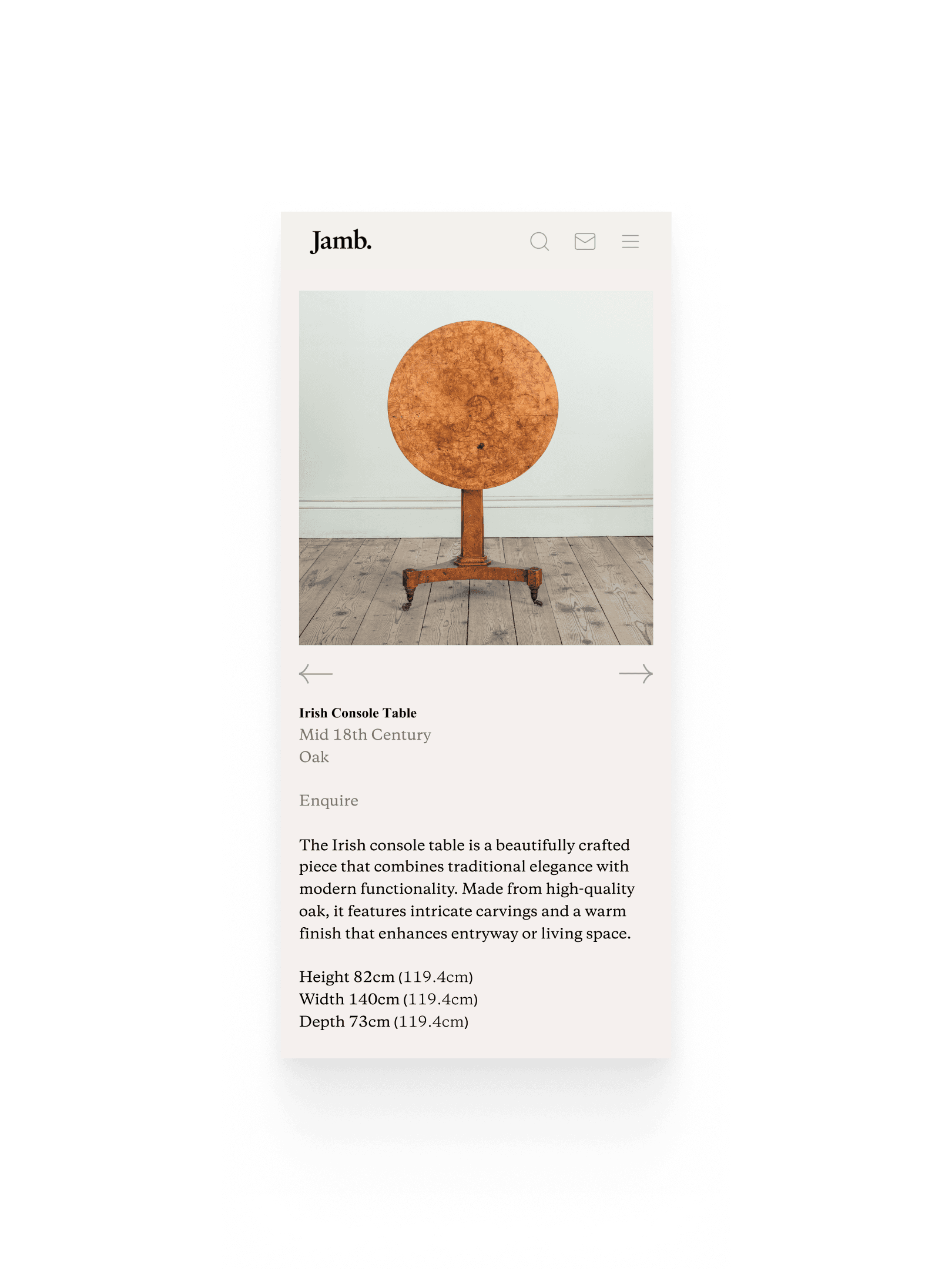
Jamb's catalogue runs on two flows. Some pieces sell through checkout, most still sell through enquiry. Headless Shopify lets the same product record route to either, with variations (sizing, finish, edition) carrying through when there's a cart to render. The rest stays on the enquiry path the team has spent years tuning. For the homeware that carries stock, Shopify's Buy Button drops in beside the Sanity catalogue with no separate storefront and no second CMS. Adding or pulling a category takes minutes, and the rest of the site never has to know about it.

Design
Mobile to 5K, same restraint
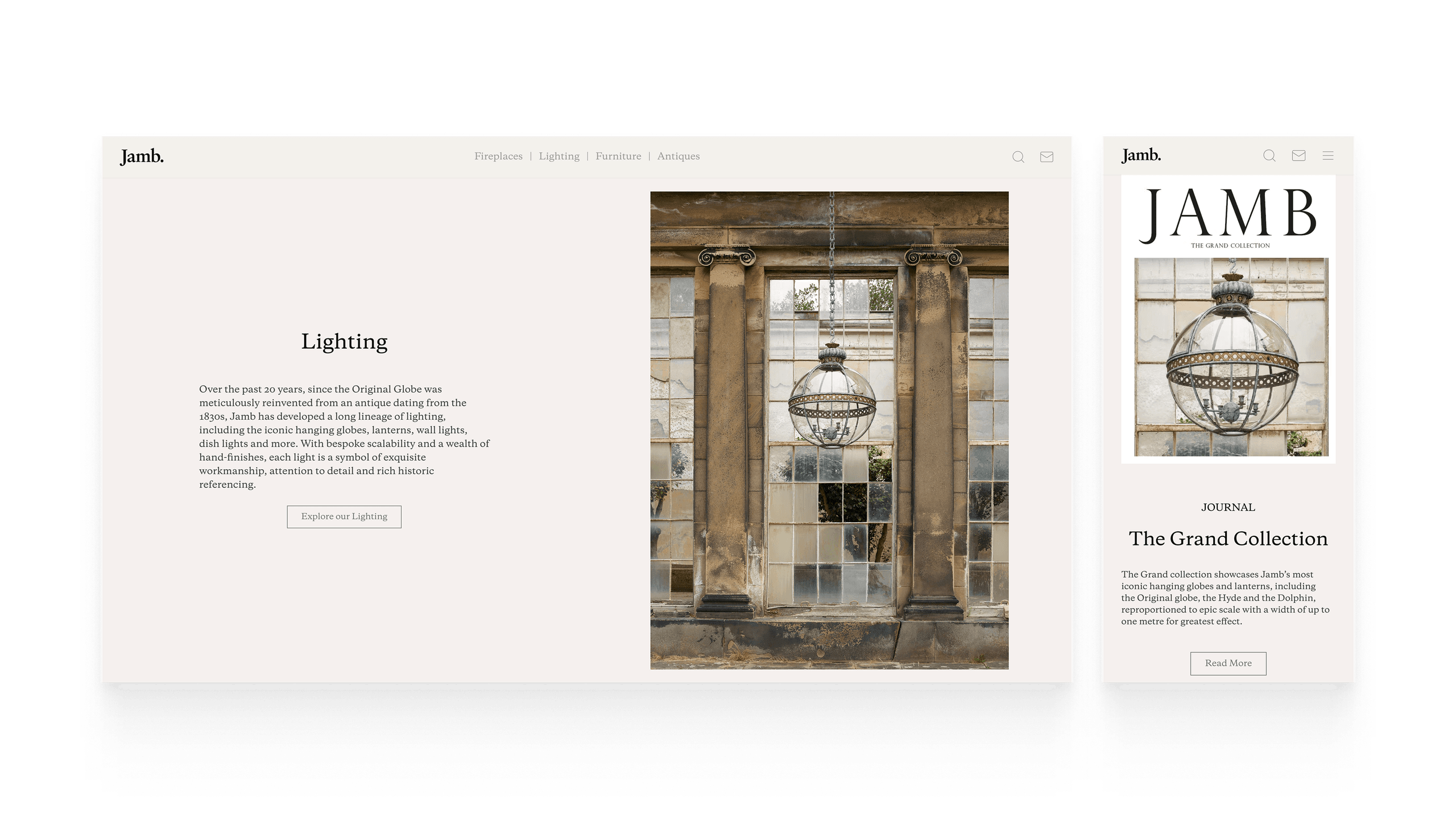
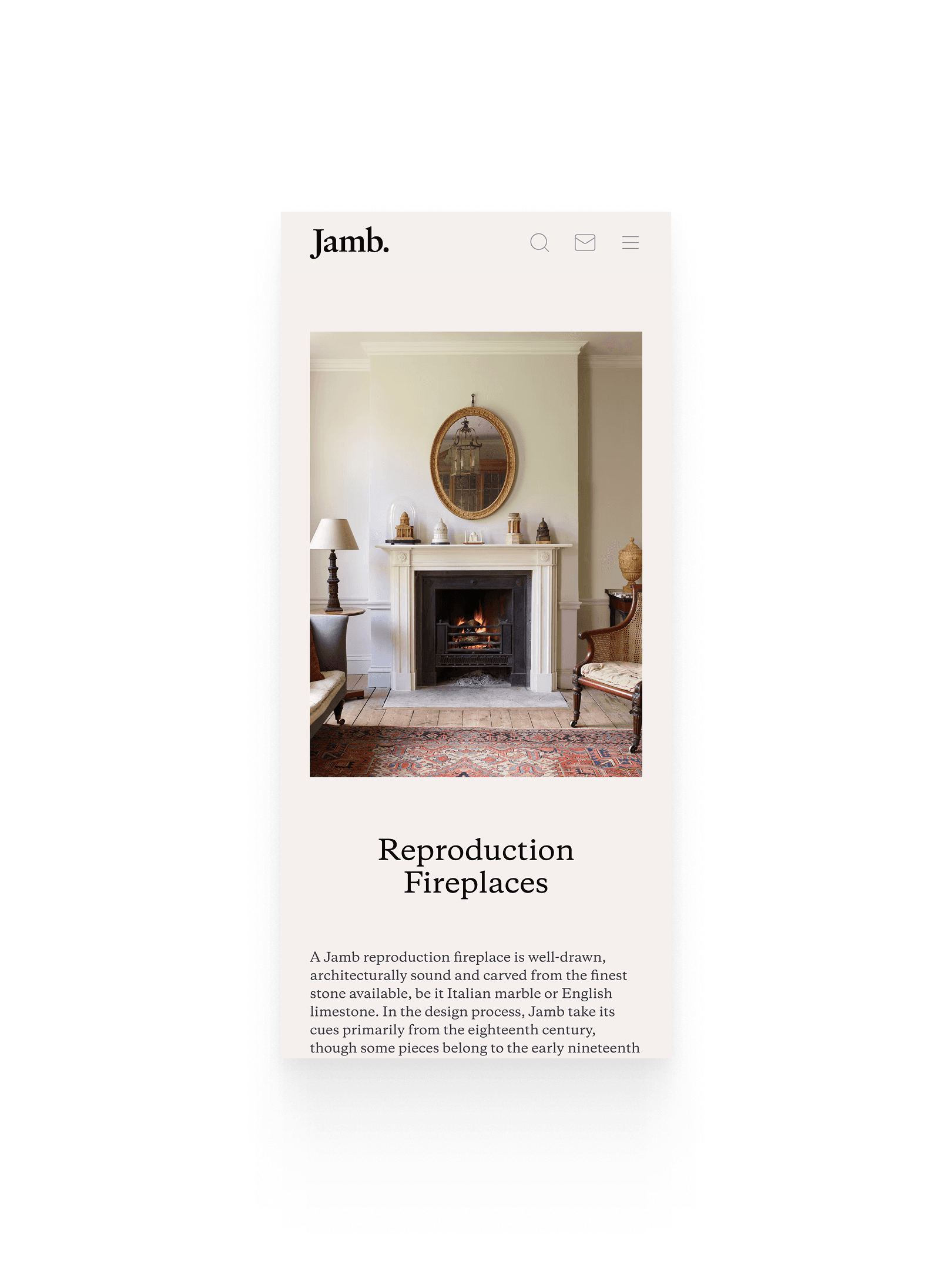
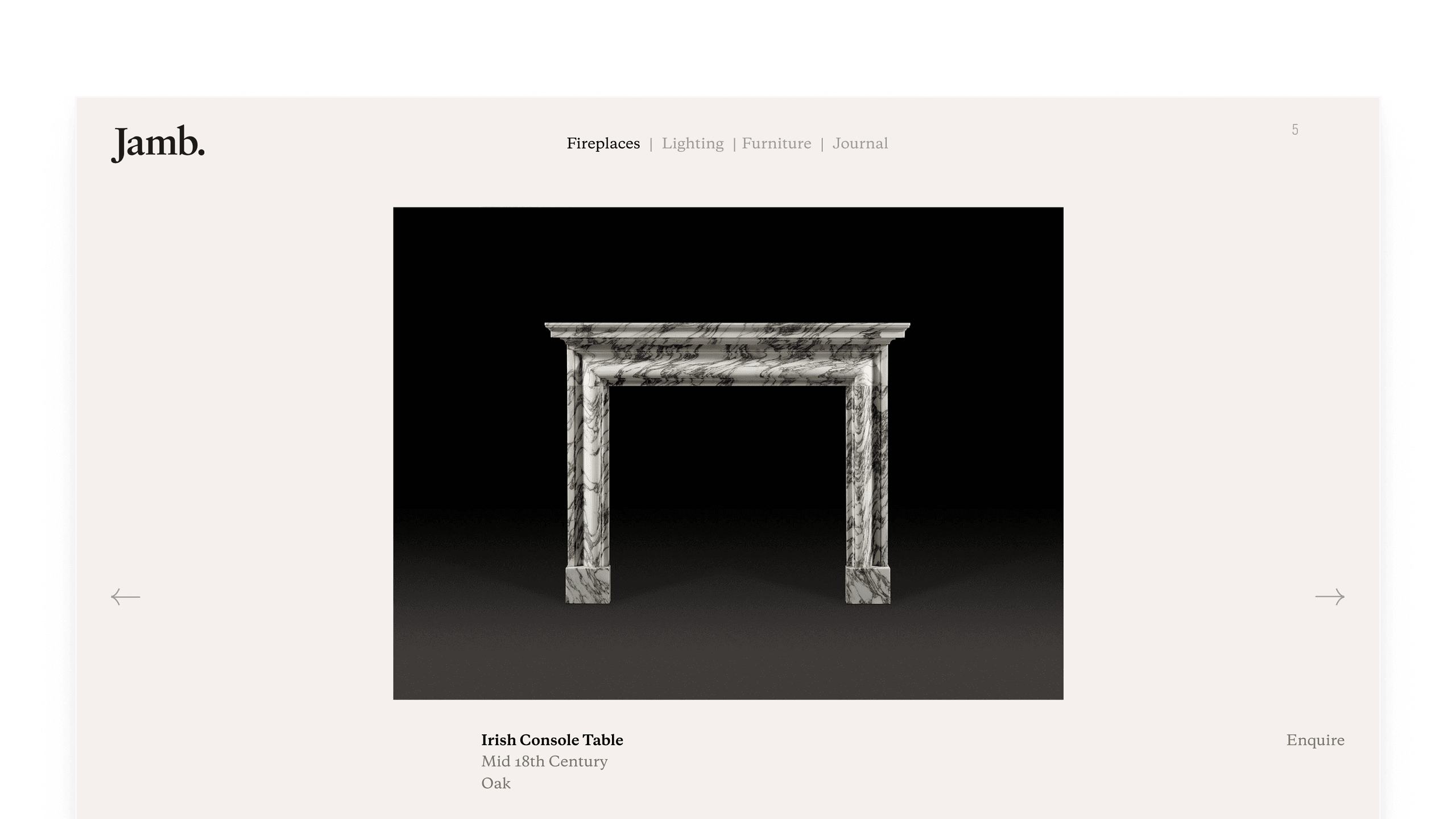
Ben Weaver led the creative direction. Our job was to tighten the lens in Figma so the designs survived the trip into code. We worked through every breakpoint from mobile, where Jamb's best photography has to carry the whole page, up to 5K iMacs where the marble grain in a chimneypiece needs to stay sharp at 1:1. The handoff to development was a spec. Every breakpoint and interaction was defined, not implied. The site's design intent doesn't drift between Figma and production.
SEO migration
Where rebuilds usually break
Most rebuilds break somewhere in the URL space. Jamb had two URL spaces merging into one, decades of organic equity to keep, and antique-specific terms that rank slowly and stay ranked for years. Before launch we built a full sitemap spanning both legacy sites, mapped every page into the new one, and wired internal links through Sanity document references rather than hardcoded URLs, so a slug change in one place doesn't cascade into 404s anywhere else. After launch we watched Search Console and Vercel observability for even the smallest 4xx and 5xx errors, and shipped redirects the same day. Rankings held through the cutover.

Result
A platform that reflects the craft
jamb.co.uk launched with no drama. Hundreds of enquiries came through in the first week, and page loads stayed sub-second. Build times went from 30 minutes to three across 2,000+ pages, so the team can push changes without waiting on a developer. A wider Shopify Connect (opens in new tab) roll-out is queued for the parts of the catalogue that suit a checkout flow, but there's no rewrite on the horizon.
Common questions
Jamb project FAQs
What buyers ask us about the Jamb project, answered from the work itself
How long did the rebuild take?
Most of our stock sells by enquiry, not checkout. Does headless commerce still fit?
What happens to search rankings when two sites merge into one?
How much faster is the site to work with?
What state was the old setup in?
Services

Related videos

Get in touch
Tell us what you're building. We reply within one working day. Jono or someone on the team picks up every message personally.