Slingshot Bio
Roboto converged Slingshot Bio's WordPress and Shopify sites into one headless Shopify build on Next.js and Sanity, instrumented end to end and AI-ready.
View case study


From HubSpot Content Hub to Directus
Last verified:
The process
First we check the existing HubSpot Content Hub and see whether the data is clean enough to move straight over to Directus, and plan around any auth walls or bot protection in the way.
Then we work out how HubSpot Content Hub renders its pages and pull the content out, even without CMS access.
Everything extracted runs through our sanitization pipeline, which flags slop, normalizes structure, and leaves us clean content to work with.
Before anything moves, we agree the Directus content model with you, shaped around how your editors actually work.
We transform the content to the agreed schema and run a full dry run, so mappings and edge cases prove out before production.
Once the dry run is clean, everything moves into Directus in one controlled cutover.
Every old URL gets mapped to its new home with the right redirect, so rankings and link equity survive the move.
Finally, automated browsers sweep the new site for data issues, design regressions, and missing SEO signals.
Key pain points
HubSpot Content Hub has its perks, but you practically need a Mr. Moneybags subscription to keep the lights on. Pricing shoots up the moment you add seats, automations, or anything remotely "enterprise," and you can only hope the pricing team doesn’t wake up one day and charge the equivalent of a beach-facing villa.
It’s also not winning any awards for flexibility. Deep customization is limited, the theme system is rigid, and you’re stuck learning HubL, a proprietary template language that no one dreams about using. The plugin ecosystem is tiny compared to WordPress, so advanced requirements usually mean custom builds, workarounds, or giving up. And yes, parts of the system can feel slow and clunky when you least expect it.
If you’re okay with the trade-offs, great. If not, you know where to find us.

Expensive pricing structure
HubSpot gets pricey really fast with every new seat, feature, or automation. It ends up feeling like a fresh subscription to financial pain.

Limited customization flexibility
The theme system is rigid, and anything beyond surface-level edits usually needs a developer. "Drag-and-drop" has limits… and you’ll hit them quickly.
Smaller theme and plugin ecosystem
Compared to WordPress or open-source giants, HubSpot’s marketplace feels tiny with fewer prebuilt solutions and more custom work.
Proprietary HubL language
Say hello to HubL, HubSpot’s own templating language. It works… but only in HubSpot. Enjoy the vendor lock-in.

Platform lock-in
Once you're in, getting out feels like moving out of a house with 14 years of hoarded junk. Migration isn’t fun.
E-commerce limitations
Content Hub can run landing pages and lead funnels, but full-scale eCommerce? Not its game and definitely not its strength.
Key advantages
Directus instantly wins points with us because, well… it has a rabbit for a logo. But beyond that, it's genuinely a solid database-first CMS. If you like the idea of a CMS that sits directly on top of your SQL database without any abstractions, Directus feels incredibly natural.
You can self-host it, tweak it endlessly, and treat your schema exactly the way you want. Editors get a no-code admin UI that feels polished, developers get REST and GraphQL out of the box, and teams get workflows, versioning, automations, and proper permission controls. It's flexible, fast, and a great fit if your content is really just structured data waiting for a smarter interface. If your project revolves around relational data and you want total control from database to API, Directus is one of the cleanest ways to build it.

Intuitive non-technical interface
Editors get a clean, no-code admin panel that feels more like a productivity tool than a CMS. Non-technical teams can handle content updates without pinging developers every five minutes.
Database-agnostic SQL integration
Directus plugs straight into your SQL database and turns it into an API instantly. If your data lives in Postgres, MySQL, MariaDB, or SQLite, it just works.
Field-level permission controls
You can lock down every field, table, and action with granular role-based permissions. Perfect for teams that care about security and don't want interns accidentally deleting production data.
Built-in REST/GraphQL support
Your entire database is instantly exposed as both REST and GraphQL endpoints. Just plug into your frontend and start shipping.
Extensive UI customization
Directus lets you tweak the interface, add custom views, tailor layouts, and build the exact editing experience your team needs. It feels like a CMS you can actually shape instead of fight.
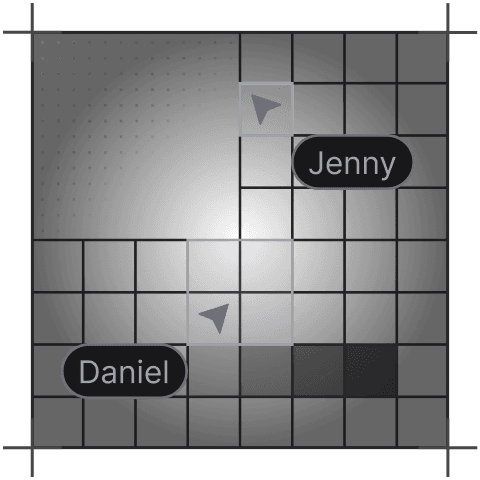
Real-time collaborative editing
Multiple contributors can work in the Studio at the same time without stepping on each other's toes. Collaborative editing shipped in February 2026, so drafts stay clean and the whole workflow feels built for modern teams, not 2010 intranets.
AI Assistant with image and PDF support
The built-in AI Assistant can process images and PDFs as well as text, and it works across OpenAI, Anthropic, and Google Gemini. It's a genuinely useful addition rather than a feature-list checkbox.
Tell us what you're building. We reply within one working day. Jono or someone on the team picks up every message personally.
Join the growing list of successful migrations