Case Study
View Case StudyTray.ai
Migrating hundreds of thousands of pages, re-platforming and extending for the leading composable AI integration platform


From Payload to Uniform
Last verified:
Key pain points
Payload’s biggest issue is how quickly it hands you the responsibility baton. Because it leans so heavily on self-hosting, you’re suddenly running databases, managing infra, dealing with scaling, and debugging auth quirks at 11 pm. And since the platform is still maturing, updates can feel unpredictable, and the surrounding ecosystem isn’t quite deep enough yet to soften the landing when something breaks. The recent Figma acquisition didn’t help either. Support has felt a bit lighter, and some priorities clearly shifted, alongside pricing.
Payload feels flexible on day one, the moment your project grows you’re either engineering around gaps or paying more than expected. If you're debating whether Payload fits the future of your stack (or you’re already feeling the cracks), we’re always happy to help you plan a cleaner path or a migration that won’t come back to bite you.

Steep learning curve
Payload’s code-first approach means you need solid dev experience to use it effectively. Non-technical teams will struggle, and onboarding takes longer compared to more guided CMSs.

Smaller ecosystem of plugins
There aren’t many ready-made extensions, so you’ll end up building features yourself. This adds development time and increases long-term maintenance.
Potential performance overhead
Because it’s a full JavaScript backend, Payload can get resource-heavy under high traffic. You’ll need to optimise your server setup and monitor performance more closely.
Gaps in documentation
The docs are improving, but there are still missing pieces and unclear sections. New users often have to dig through GitHub issues to find answers.
Small community
The community is growing but still small, so there’s less shared knowledge, fewer tutorials, and slower troubleshooting compared to bigger CMS ecosystems.
Requires separate hosting
Payload doesn’t come with built-in hosting, so you’re responsible for setting up and managing your server. That adds extra cost, extra setup, and extra operational overhead.
Key advantages
Uniform positions itself as a “composable DXP,” which is enterprise-speak for “it does a bit of everything on top of your actual CMS.” To be fair, the visual workspace is genuinely useful. Marketers get drag-and-drop control, personalization, and A/B testing without pinging developers every five minutes. And if you’re already juggling multiple systems (CMS, commerce, DAM), the orchestration layer can tidy up the chaos.
That said… we’ll be honest, we don’t really build with DXPs like this anymore. Whenever a headless tool starts shouting “DXP” from the homepage, it usually means heavyweight architecture, unnecessary complexity, and a bill only Fortune 500 companies would smile at. If you’re considering it anyway, feel free to get in touch. We’ll happily walk you through better, modern alternatives before you sink a quarter’s budget into something you probably don’t need.

Visual experience composition
Uniform’s visual builder lets marketers piece together pages without pinging developers every 5 minutes. It’s basically a drag-and-drop layer on top of your headless stack.
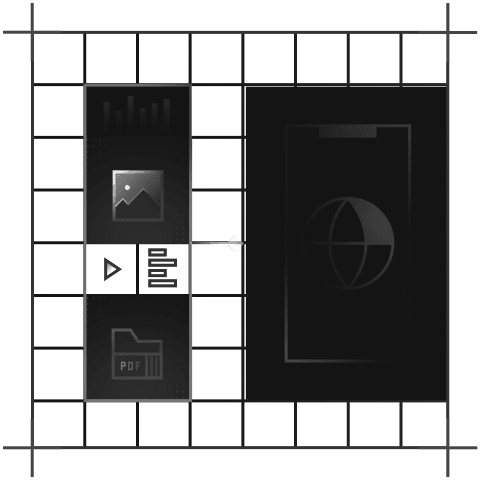
Multi-source content federation
Uniform pulls content from multiple CMSs, DAMs, and commerce tools into one interface, so you don’t need 10 tabs open to build a single page
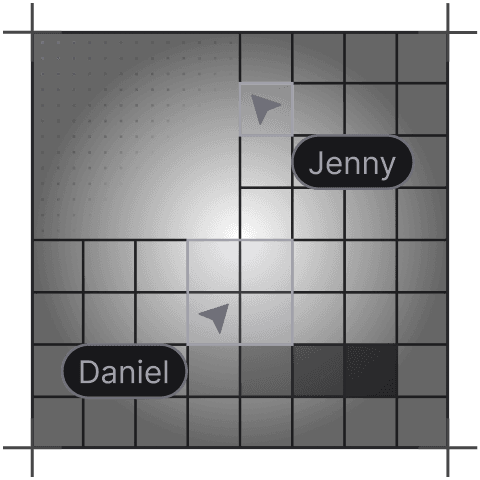
Real-time collaboration tools
Teams can edit, plan, and experiment together without overwriting each other’s work. It’s built for big organisations where ten people touching the same page is a weekly occurrence.
Enterprise-grade scalability
Uniform is built to handle traffic spikes and heavy personalisation workloads. It’s overkill for small sites but a safe bet for enterprises terrified of a Black Friday outage.
Omnichannel content management
You can pipe the same content across web, apps, and any other channel marketing dreams up. Useful for brands juggling multiple experiences without wanting to rebuild the same page three times.
Built-in A/B testing
Uniform ships with native testing and targeting, so teams can experiment without gluing together half a dozen tools. It’s marketer-friendly and fast.
Fill out the form below and we'll get back to you
Join the growing list of successful migrations
Case Study
View Case StudyMigrating hundreds of thousands of pages, re-platforming and extending for the leading composable AI integration platform
Case Study
View Case StudyFrom Sanity overages to instantaneous publishing, we brought Mario Testino into the fast lane, and did it in style.

Case Study
View Case StudyHelping the UAE's most prolific Pay in 4 merchants scale their design system and composable infrastructure.

Case Study
View Case StudyHow we helped the fastest growing online cycling community, push the editorial velocity to new heights.