Case Study
View Case StudyTray.ai
Migrating hundreds of thousands of pages, re-platforming and extending for the leading composable AI integration platform



From Dato CMS to Magnolia
Last verified:
Key pain points
DatoCMS gives all the vibes of Prismic, but is somehow less flexible. It can feel like a glorified drag-and-drop schema builder. The moment you want to do anything mildly custom, the walls start closing in. And yes, the pricing stings. It scales fast, which is great for Dato, not so great for anyone trying to run a startup without selling a kidney.
The ecosystem is small, the extensions are thin, and deeper customisation often turns into “well, I guess we’re building that ourselves.” There’s no real visual editor, no guardrails for inactive billing, and once your project grows, you quickly realise drag-and-drop doesn’t magically give you validation or extensibility. If you need something genuinely custom or long-term scalable, there are better choices. Just contact us before you start one of the most expensive journeys.

Limited customisation options
DatoCMS hits a ceiling fast if you need deeply custom logic. The drag-and-drop model is convenient, but it doesn’t give you the freedom a code-first setup would.

Pricing based on traffic
Costs scale with usage, which can get painful quickly for growing sites. Traffic spikes = surprise bills.

Steeper learning curve
While the UI is simple, the API-driven side demands more technical understanding. Non-developers may struggle once things get complex.

Need for additional plugins
Out-of-the-box features only go so far. More advanced workflows often require plugins or custom development to bridge gaps.

Limited feature set scalability
Great for small–mid projects, but larger, more demanding setups can outgrow what DatoCMS offers out of the box.
Potential integration issues
Certain frameworks and tools need careful configuration, and edge cases appear more often than you’d expect in more mature CMS ecosystems.
Key advantages
Magnolia shines if you’re the kind of organisation that genuinely needs the full DXP kitchen sink. It packs personalisation, workflows, multi-site orchestration, multilingual publishing, DAM, marketing automation hooks, and every enterprise acronym you can think of. If your teams run complex global content operations with strict governance, Magnolia’s mature permission system, stability, and long-standing enterprise reputation make it a safe, compliant option.
To be transparent, we don’t actually prefer or build with Magnolia (or any of the DXP-flavoured headless CMSs). They try to do everything, and like most jack-of-all-trades platforms, they don’t excel at the things modern teams actually need that is speed, flexibility, clean workflows, and sane pricing. We’d happily point you toward modern alternatives like Sanity that give you 10× the agility without the enterprise bloat.

Java-based enterprise integration
Built on Java, Magnolia plugs neatly into large enterprise stacks that already rely on Java systems and legacy infrastructure. If your organisation lives and breathes JVM, Magnolia won’t fight your architecture.
Secure, scalable architecture
Magnolia’s core is engineered for high-security, high-traffic environments, with strong access control, clustering, and enterprise-grade stability. It’s built to survive heavy editorial activity and large content delivery demands.
Real-time page templating
Editors can adjust components and layouts and immediately preview results, making large enterprise content operations faster and less error-prone.
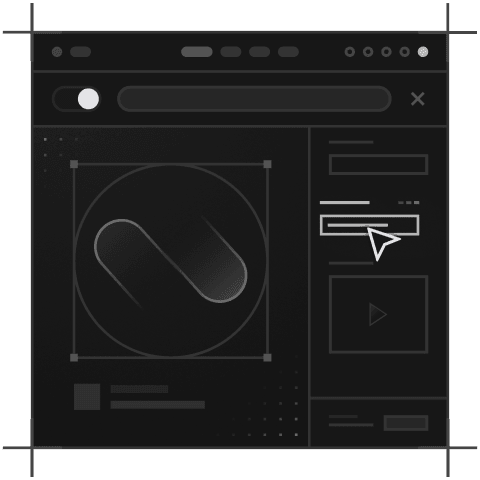
Editable component previews
Magnolia’s component-level previewing gives editors clarity on how complex pages come together, reducing back-and-forth with developers and keeping multi-team workflows sane.

Multi-site management tools
Designed for global brands, Magnolia supports multiple sites, languages, and regional variations under one roof.
Advanced workflow automation
From multi-step approvals to compliance-driven publishing flows, Magnolia handles heavyweight governance. This is the stuff big enterprises actually need when 20 departments want access but only 2 should publish.
Fill out the form below and we'll get back to you
Join the growing list of successful migrations
Case Study
View Case StudyMigrating hundreds of thousands of pages, re-platforming and extending for the leading composable AI integration platform
Case Study
View Case StudyFrom Sanity overages to instantaneous publishing, we brought Mario Testino into the fast lane, and did it in style.

Case Study
View Case StudyHelping the UAE's most prolific Pay in 4 merchants scale their design system and composable infrastructure.

Case Study
View Case StudyHow we helped the fastest growing online cycling community, push the editorial velocity to new heights.